Omniwall
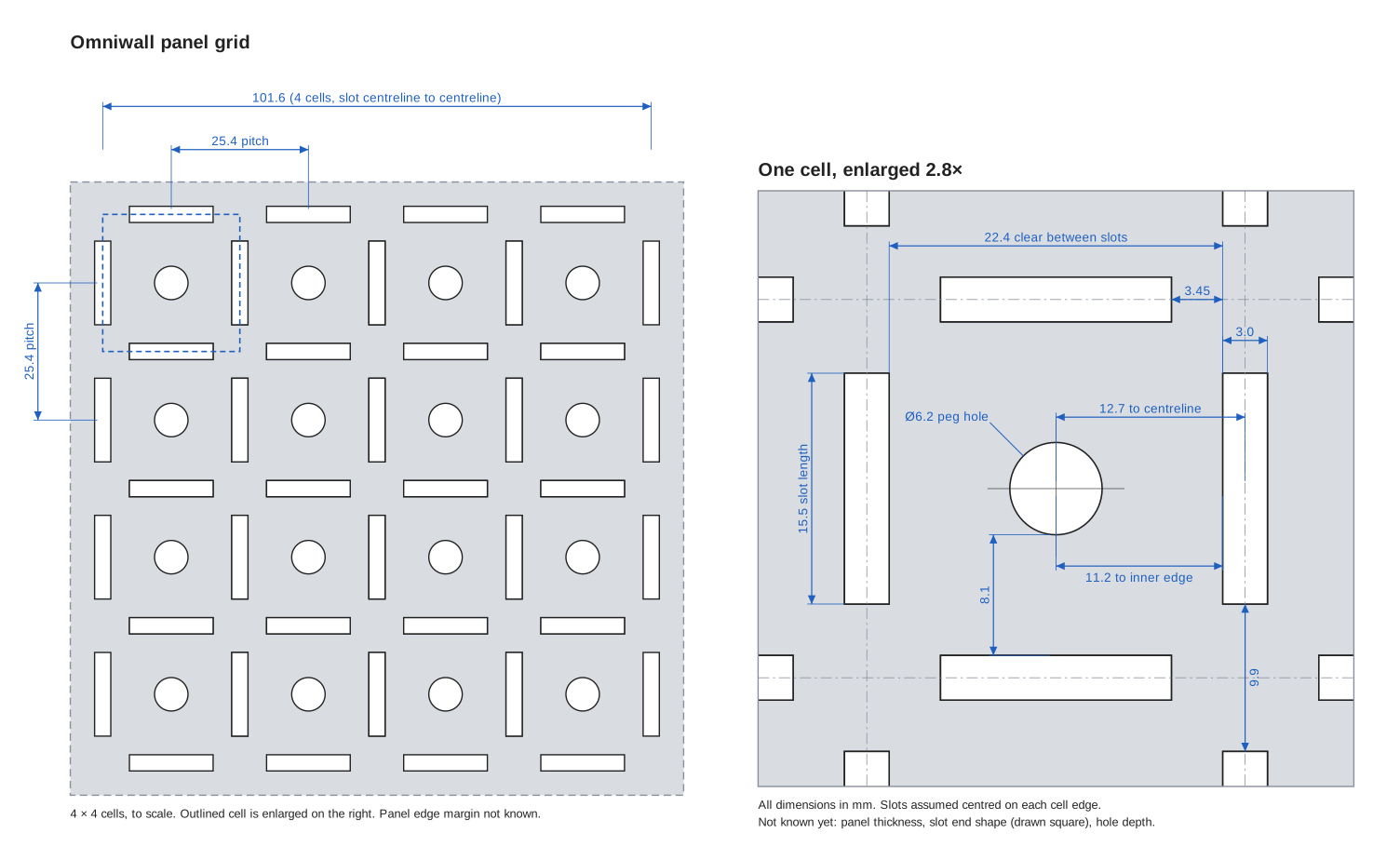
Printed parts for the Omniwall steel pegboard (25.4 mm grid of 3.0 × 15.5 mm slots and 6.2 mm peg holes, 18 ga steel). Hooks go into the panel's slots; everything else slides down onto the hooks through dovetail pockets in its back and clicks into place.
Hooks
Every hook carries the same dovetail front, so any object's pocket fits any hook. Two families, named for how they hold the panel, and a size in U: the number of housing rows the hook's front spans, with one snap notch pair per row.
| Name | Slots used | Snap rows | Was called |
|---|---|---|---|
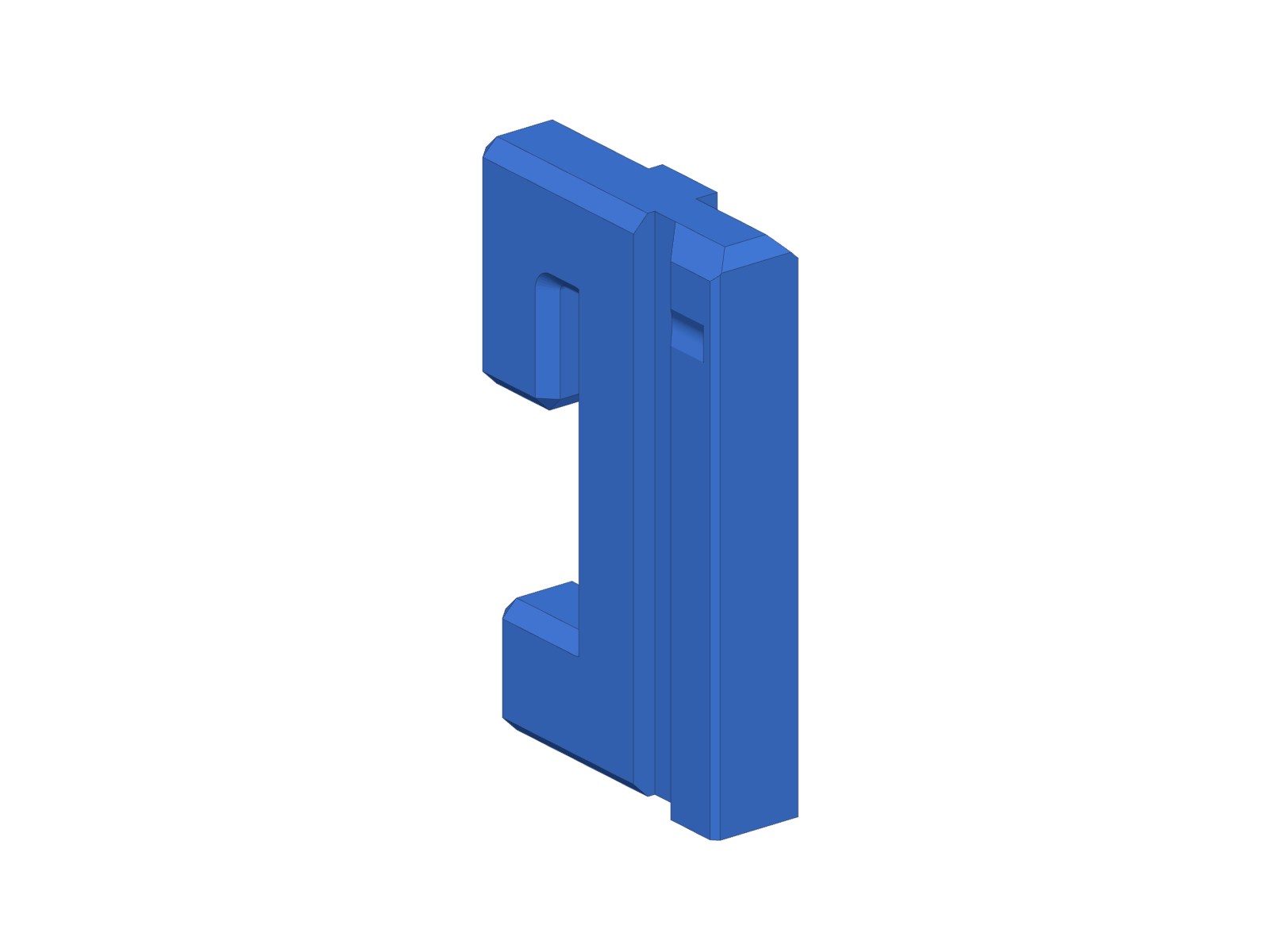
| Bridge hook 1U | 2, in one column | 1 (notch pair 2.75 mm below the top) | bridge hook, cross-slot hook |
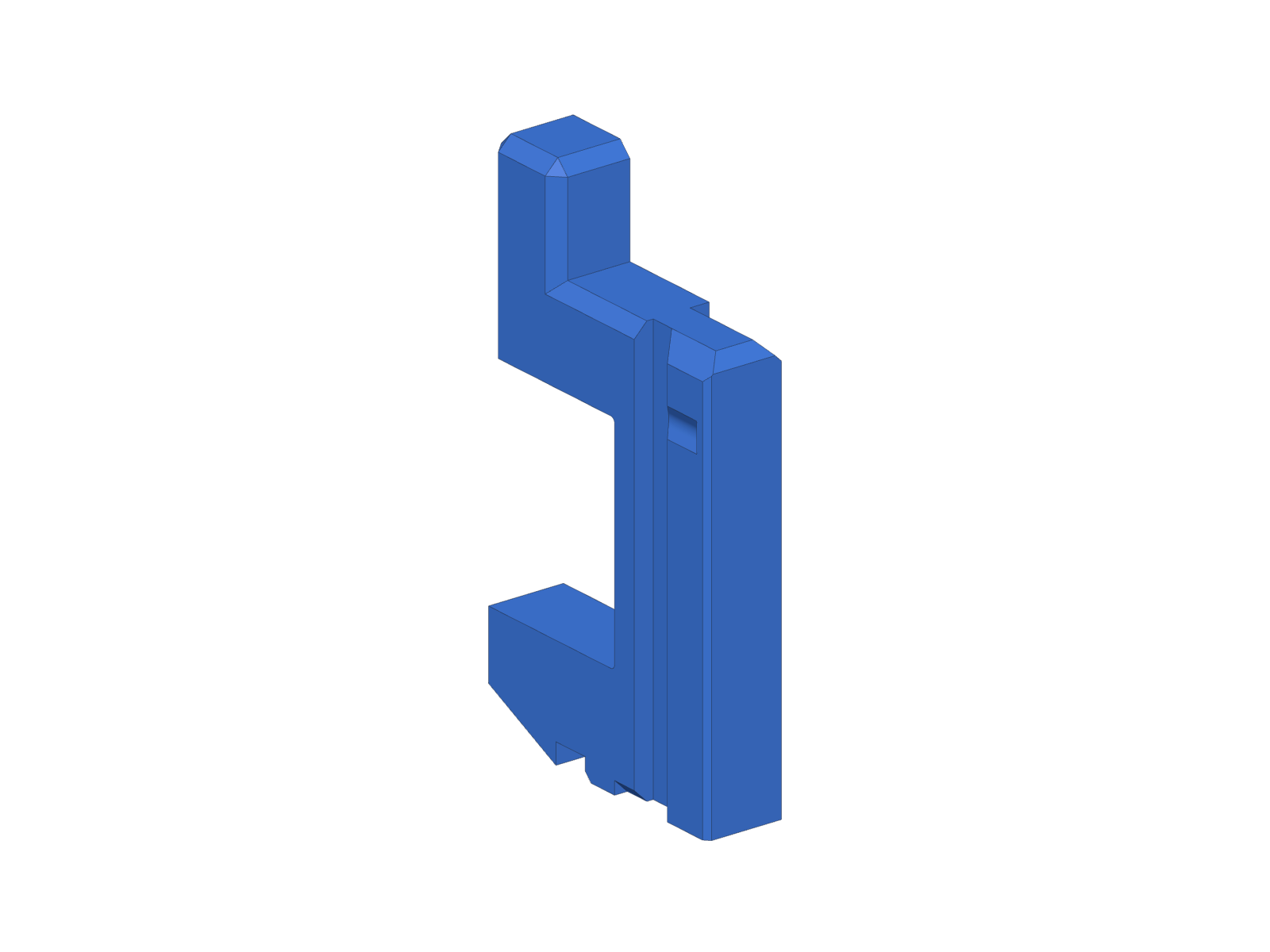
| Slot hook 1U | 1 | 1 | slot hook 1, one-slot hook |
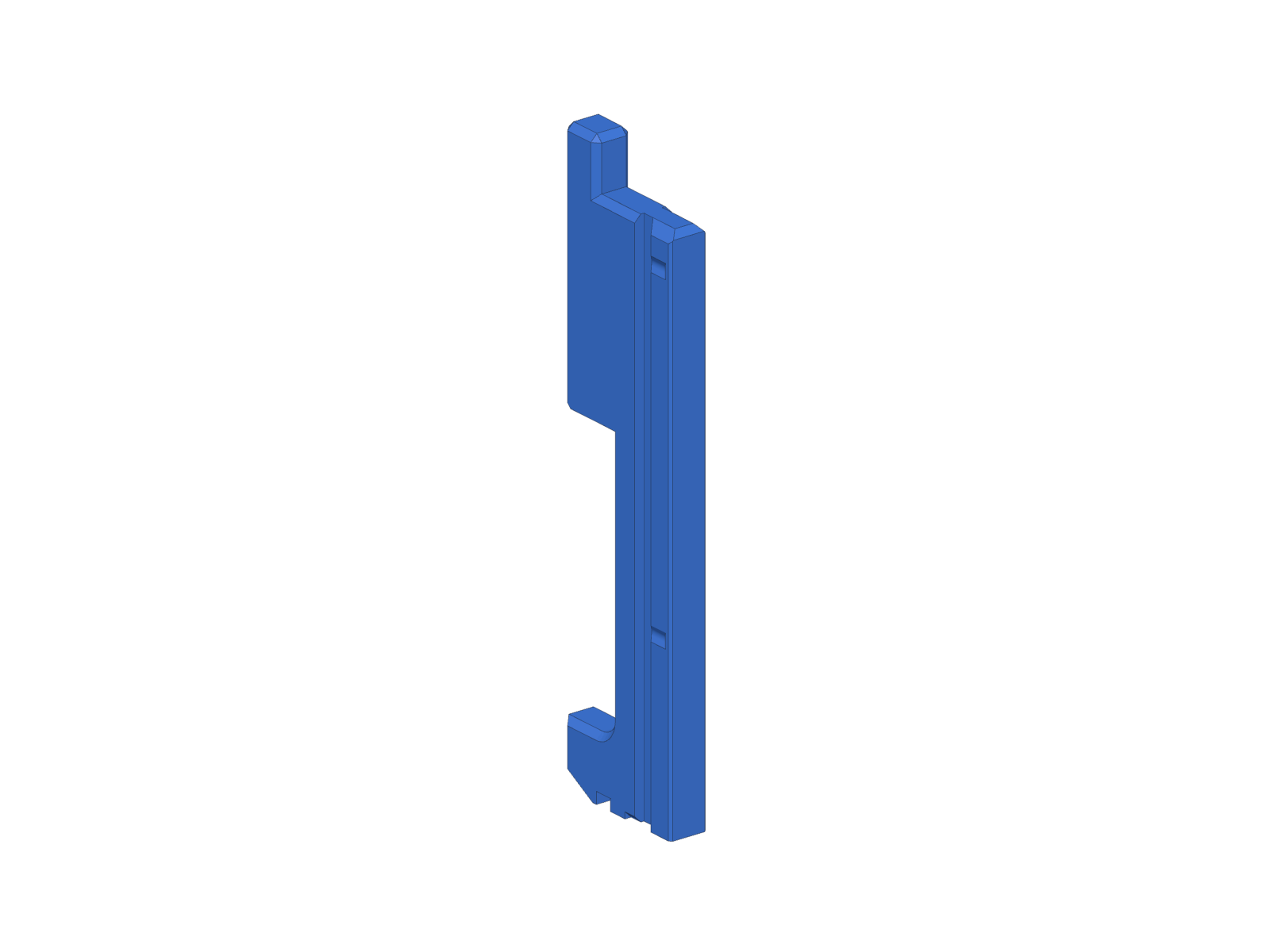
| Slot hook 2U | 2, in one column | 2 | slot hook 2, two-slot hook |
 print-tested
Bridge hook 1U
Clamps the steel bridge between two slots in line. The hook today's arc drawers hang on.
 print-tested
Slot hook 1U
Fills a single slot and snaps over its bottom rim, so an object can sit within one cell.
 print-tested
Slot hook 2U
Slot hook 1U carried down into the next slot in line: one hook held in two slots, steadier against tipping out.
Drawers
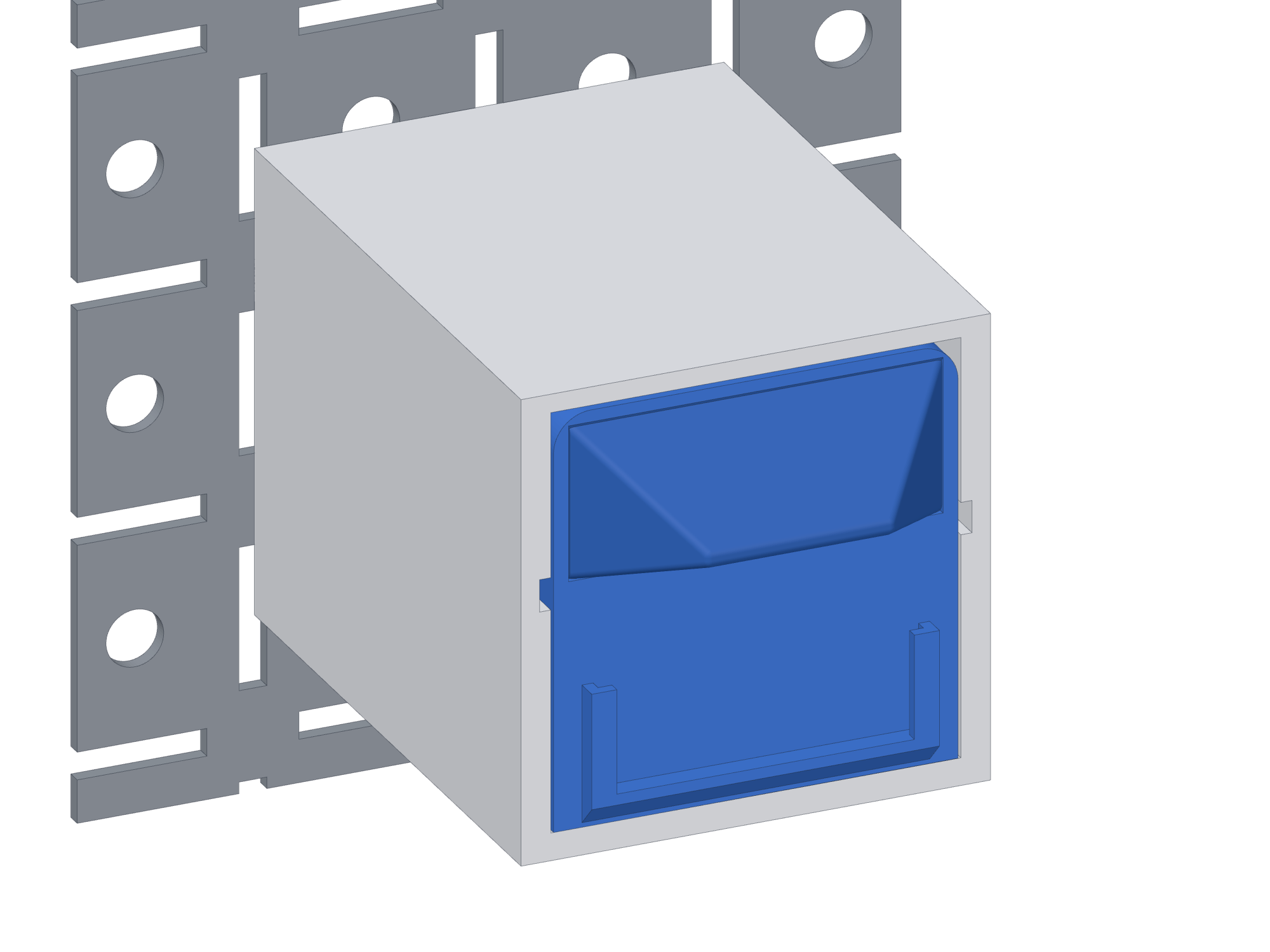
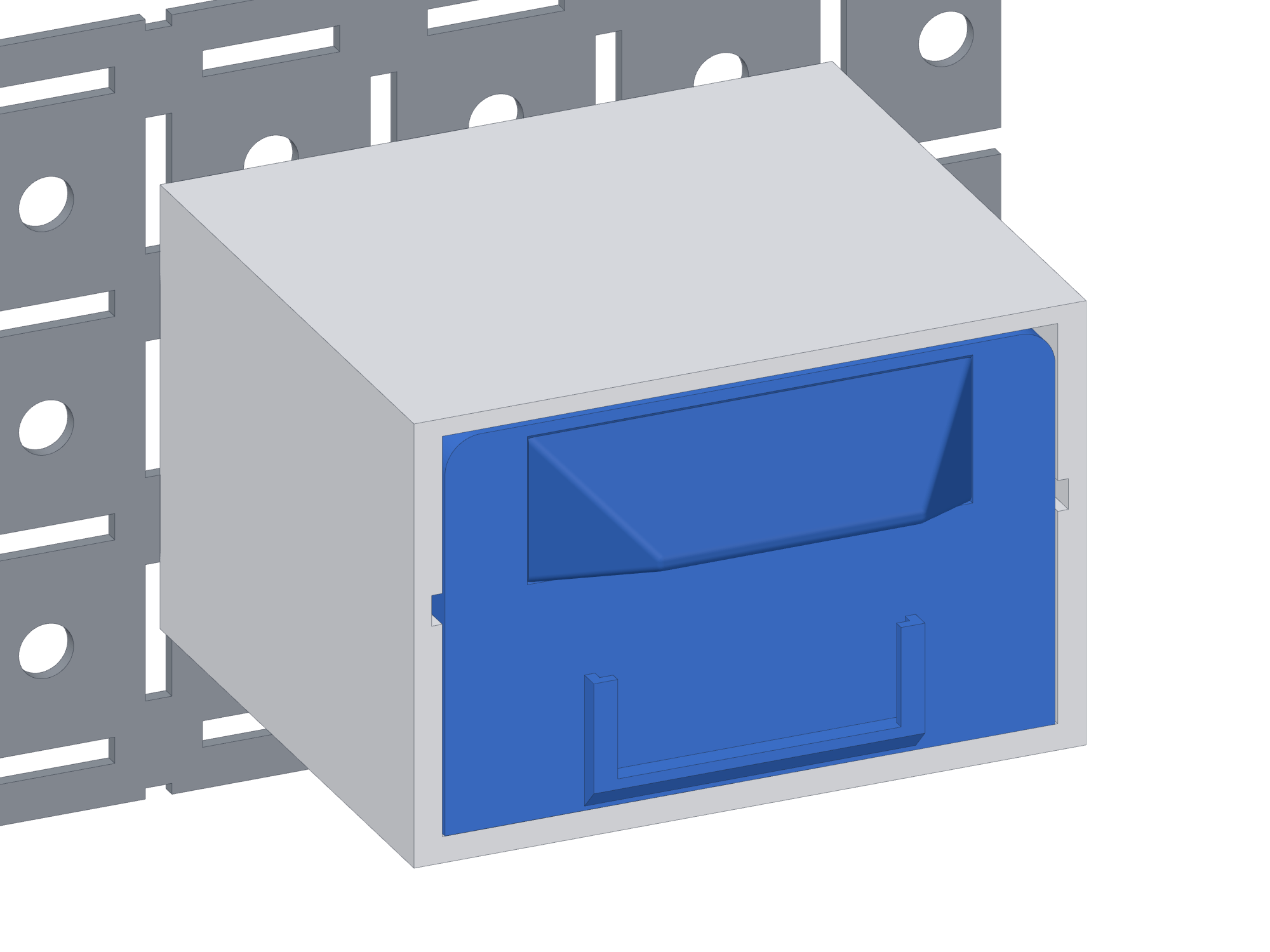
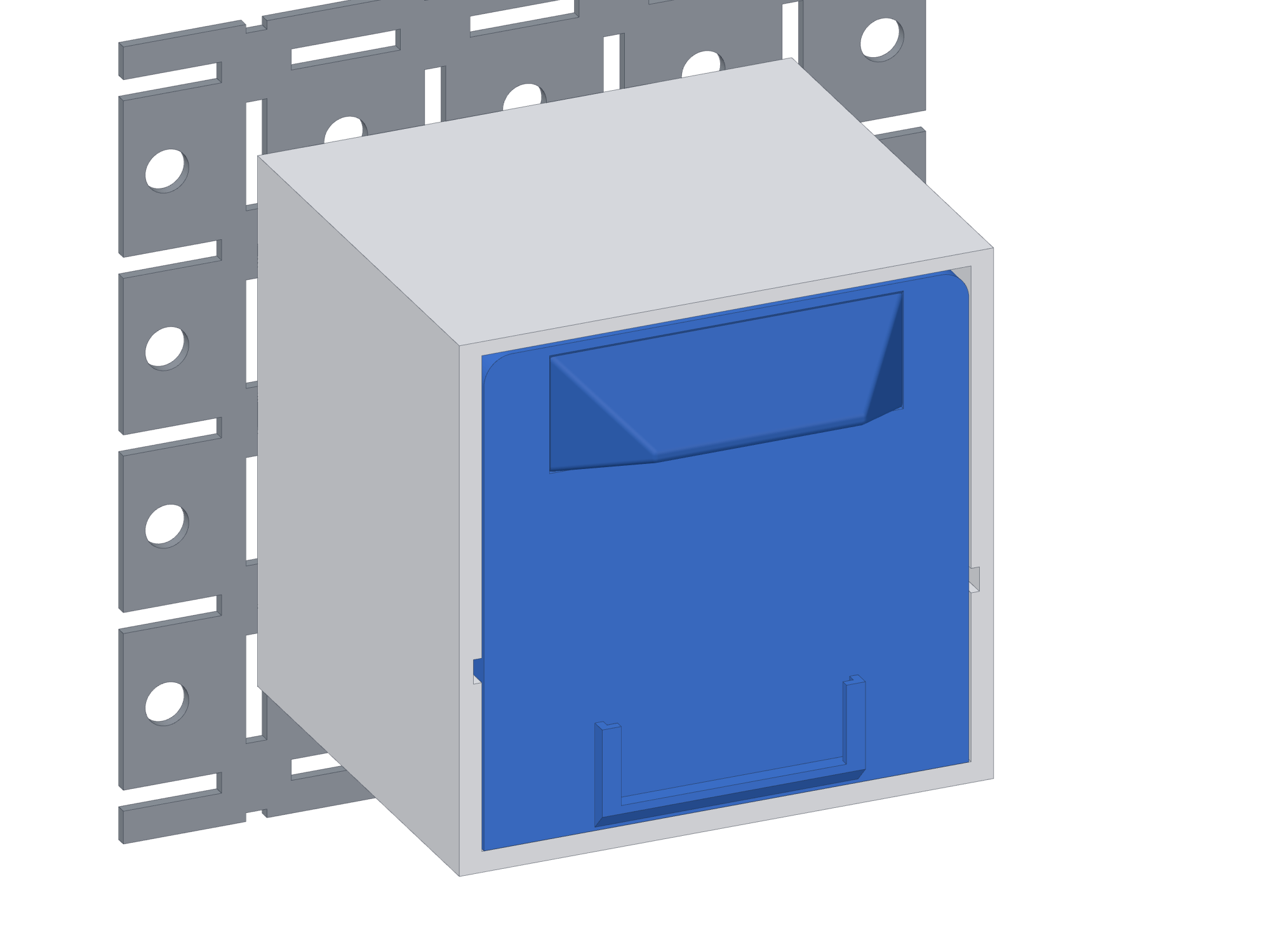
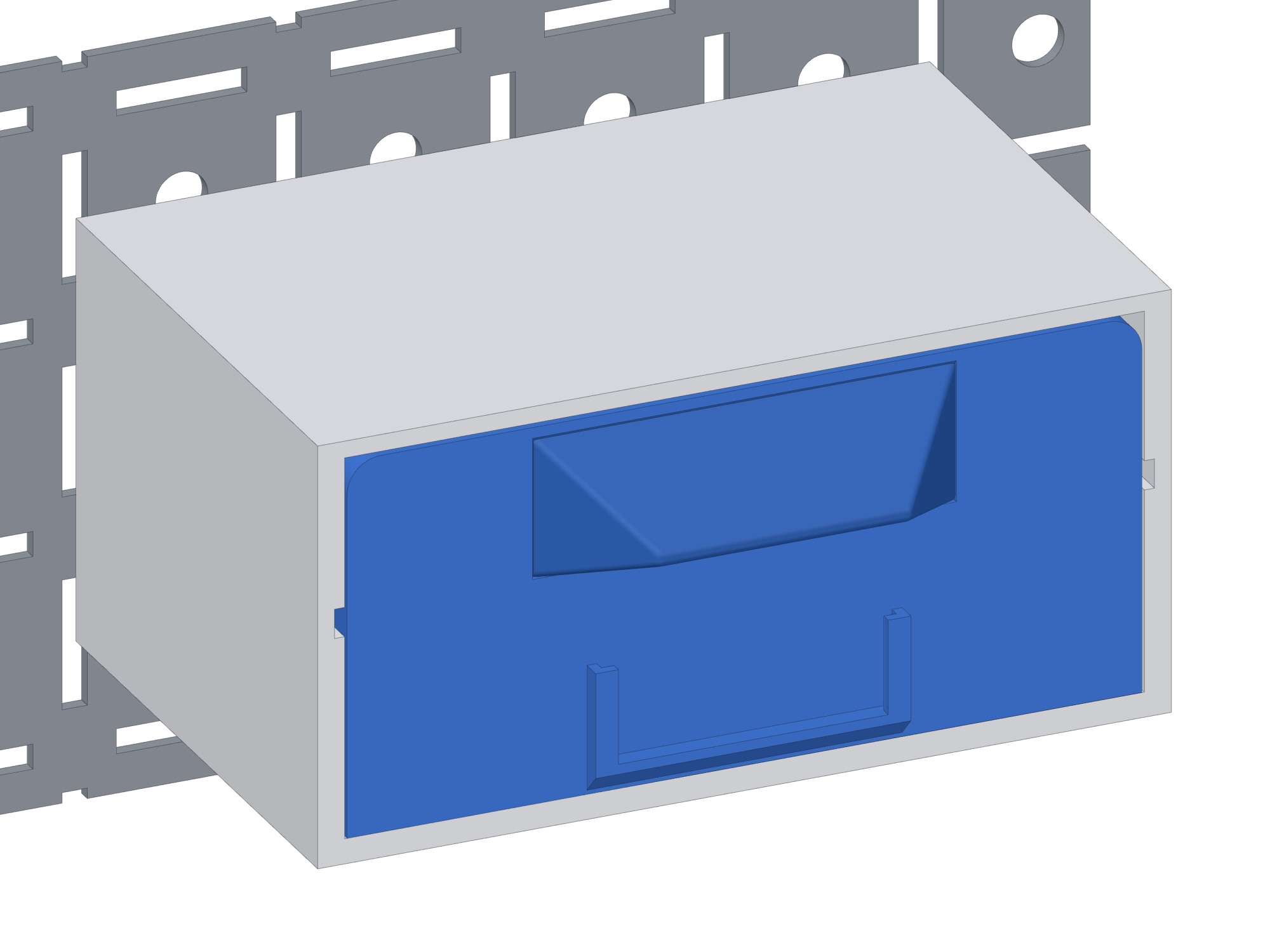
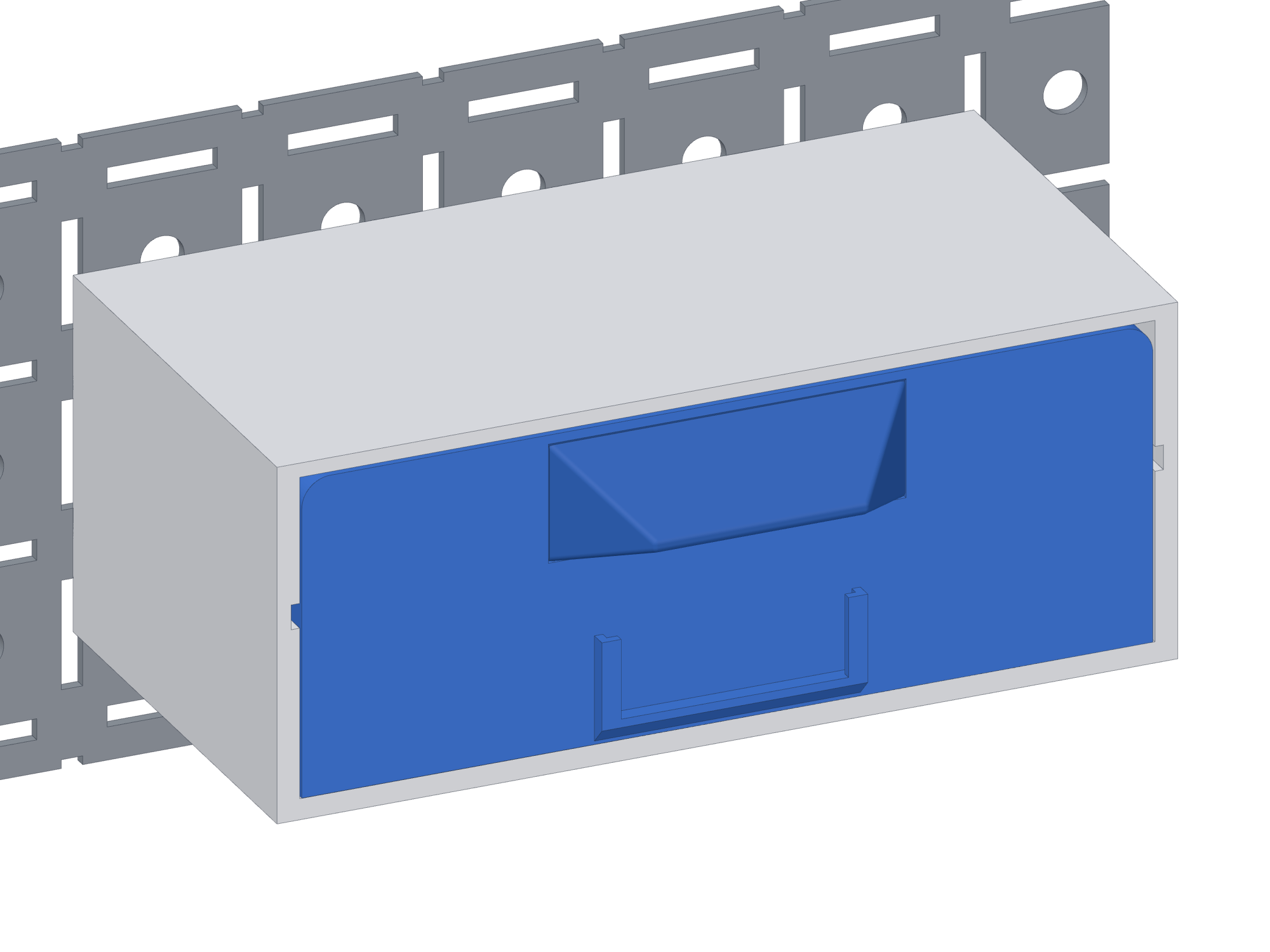
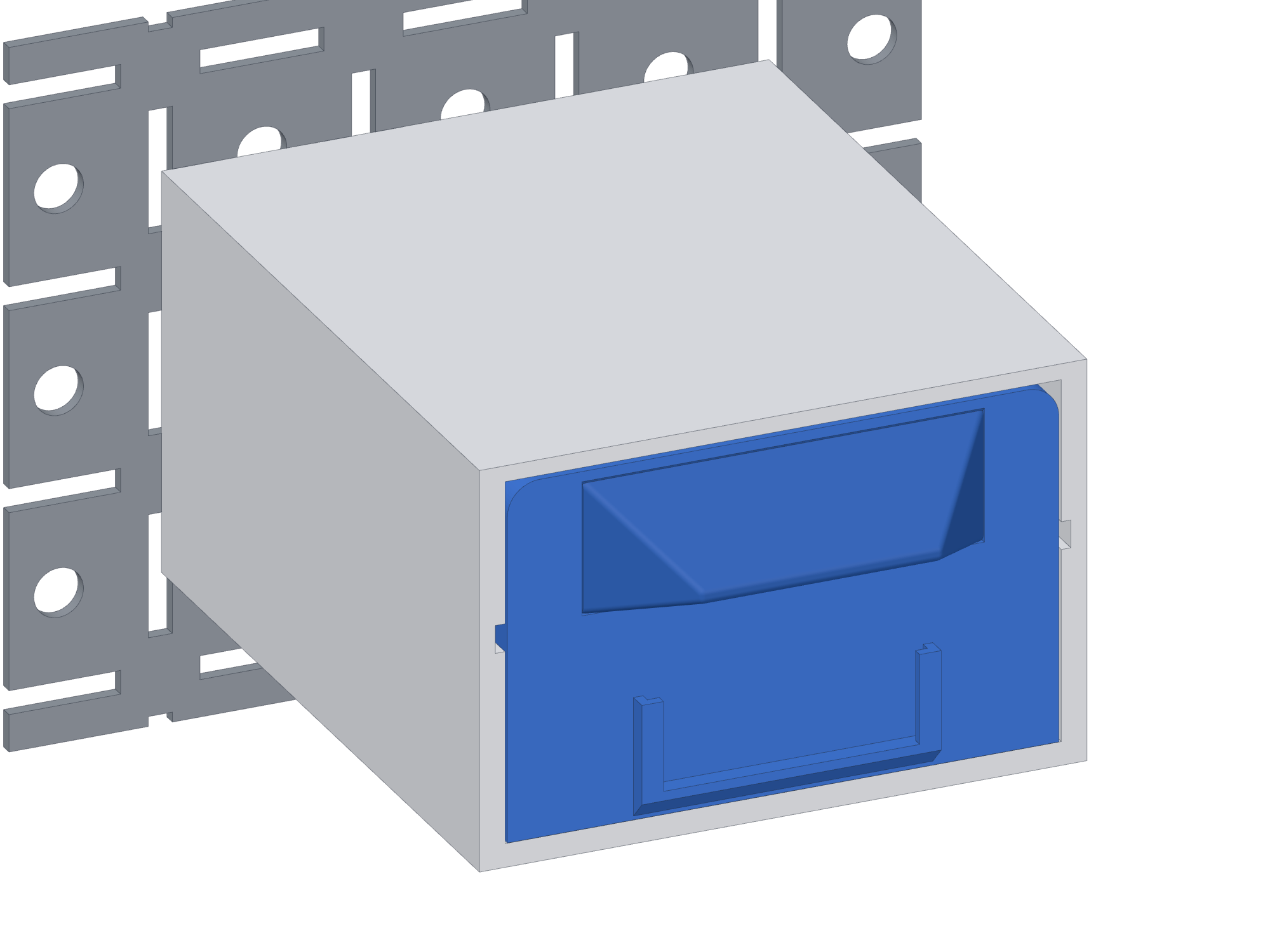
Arc drawers: a housing that hangs on the hooks and a drawer that slides out on two rear pins and tilts down 31° at the end of its travel. Units tile edge to edge with 0.3 mm between them.
 design
Arc drawer 2×2×65
Two cells wide, two rows tall, 65 mm deep, on a single hook column.
 design
Arc drawer 3×2×65
Three cells wide, two rows tall, 65 mm deep.
 design
Arc drawer 3×3×65
Three cells wide, three rows tall, 65 mm deep. The tallest drawer.
 design
Arc drawer 4×2×65
Four cells wide, two rows tall, 65 mm deep.
 design
Arc drawer 5×2×65
Five cells wide, two rows tall, 65 mm deep. The widest drawer.
 design
Arc drawer 3×2×90
Three cells wide, two rows tall, 90 mm deep. The deepest drawer.
Trays
Low trays for small parts, one row tall and 65 mm deep, like the drawers. They hang on the same hooks by dovetail pockets in their back wall and print upright without supports.
 design
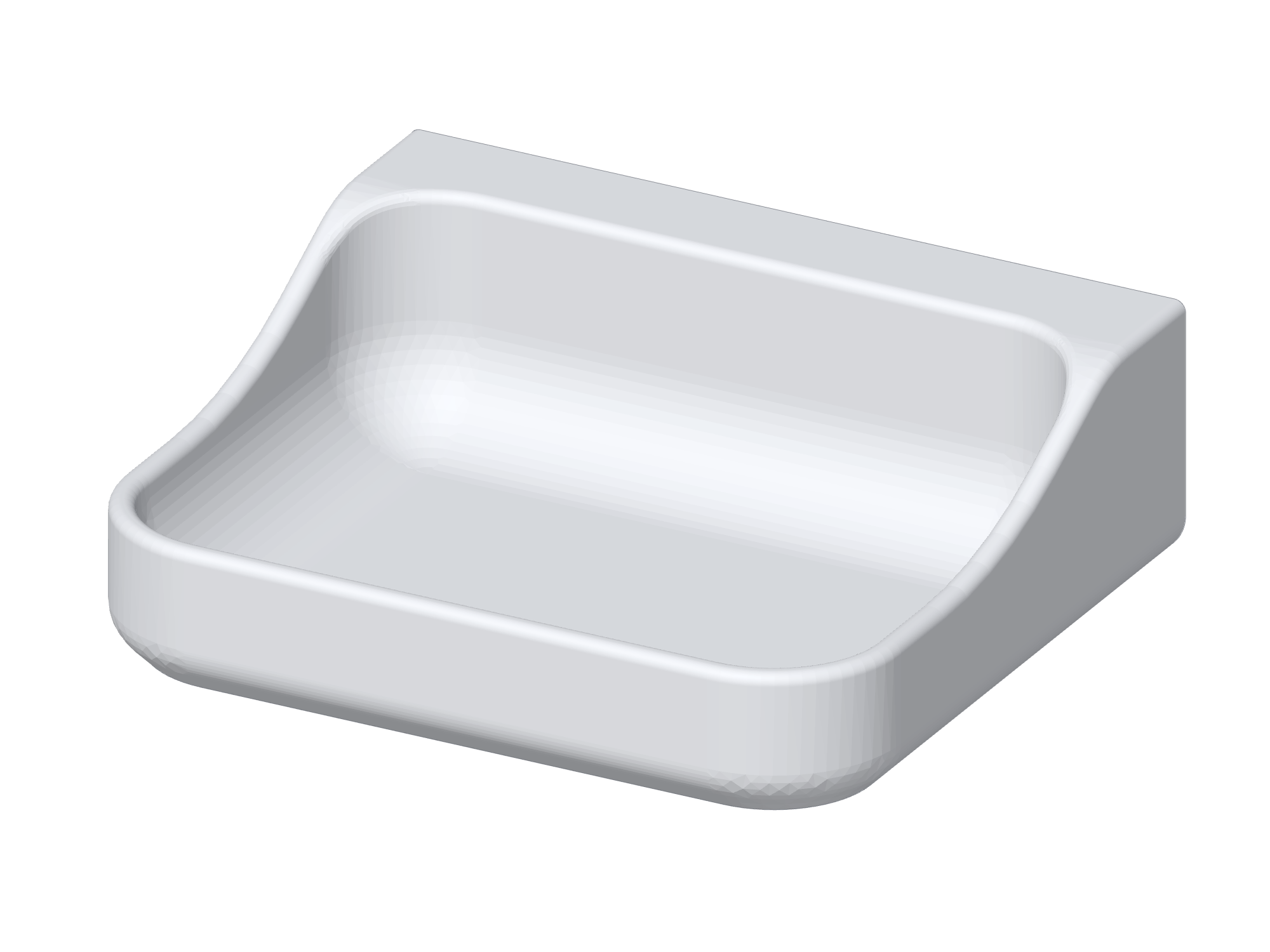
Cove tray 3×1
A flat floor with every wall curving into it, for scooping parts out with a finger.
 design
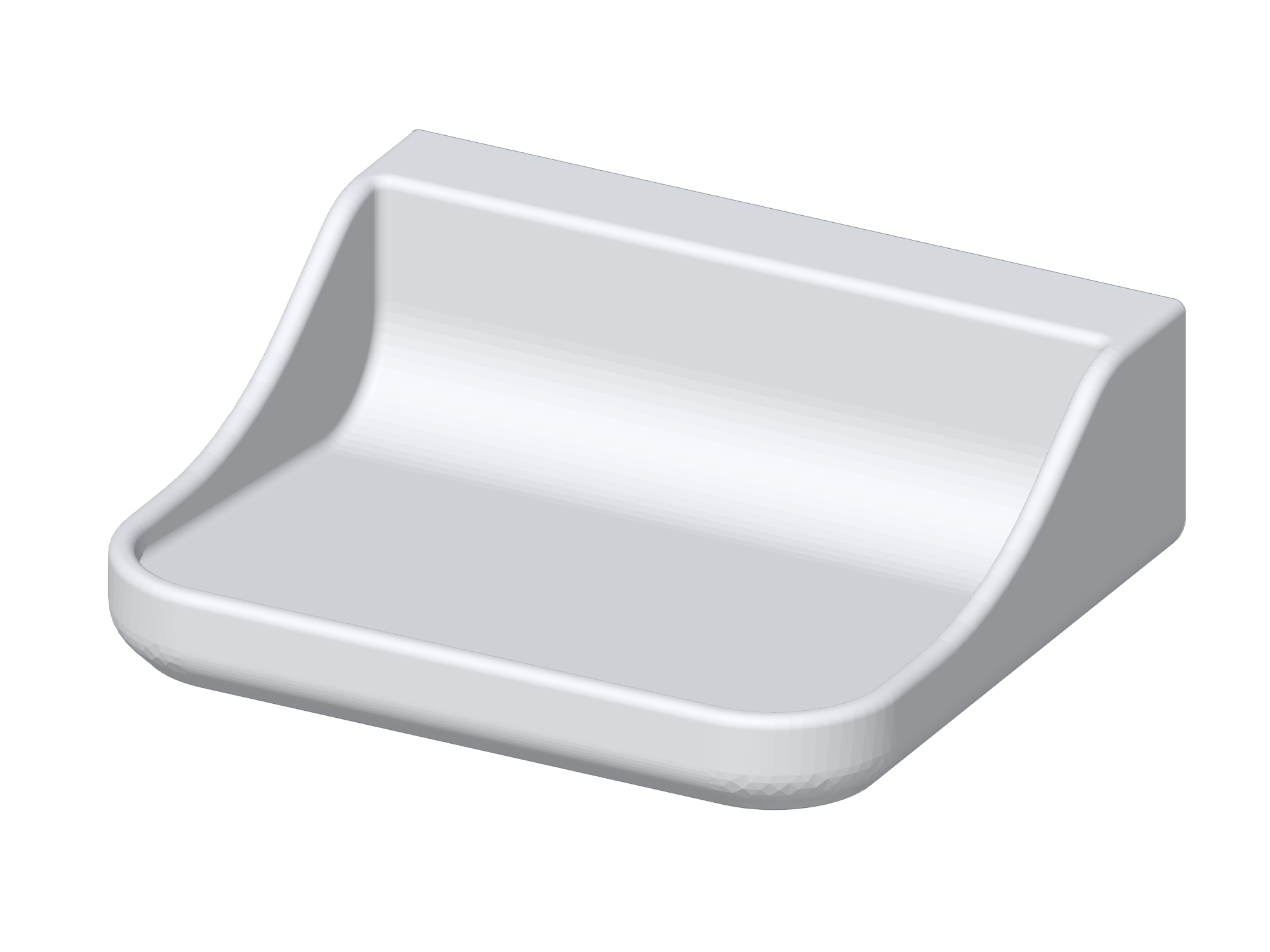
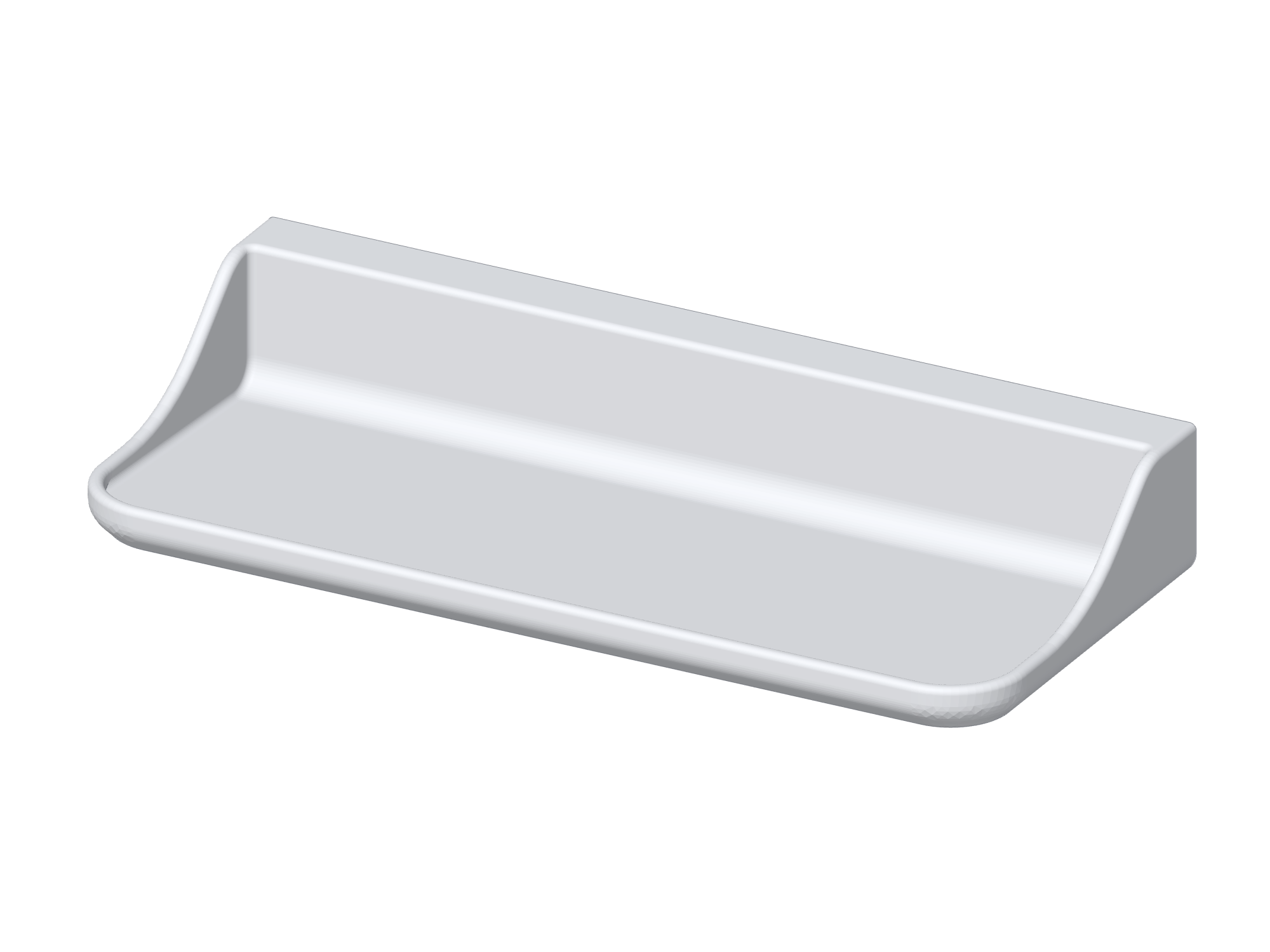
Ramp tray 3×1
The floor tilts down toward the wall, so parts gather at the back and stay put.
 design
Ramp tray 6×1
The Ramp six cells wide, with a gentler slope and a lower lip.
 design
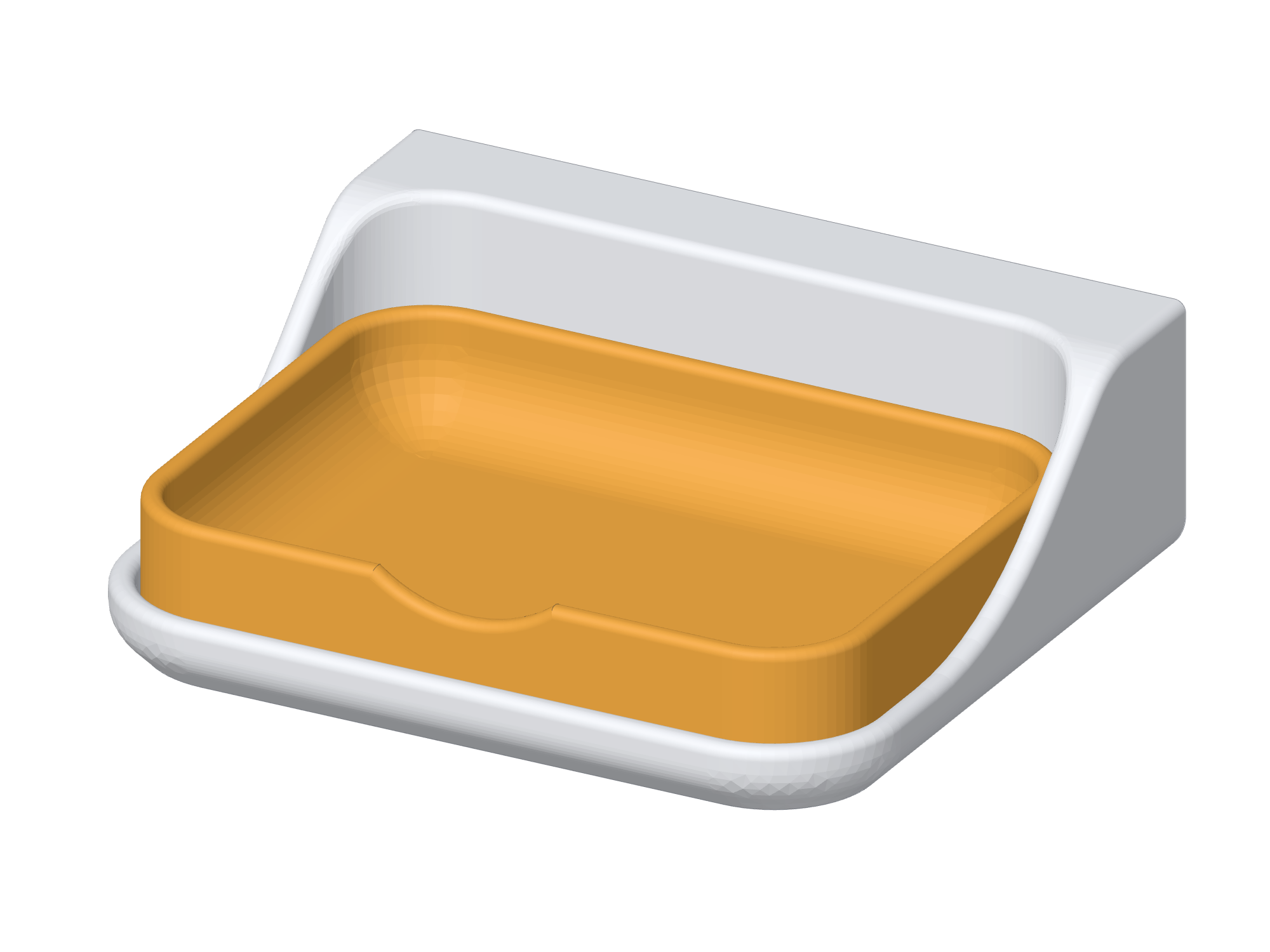
Lift-out dish 3×1
A low cradle on the hooks and a coved dish that lifts out to carry parts to the bench.
Tool bins
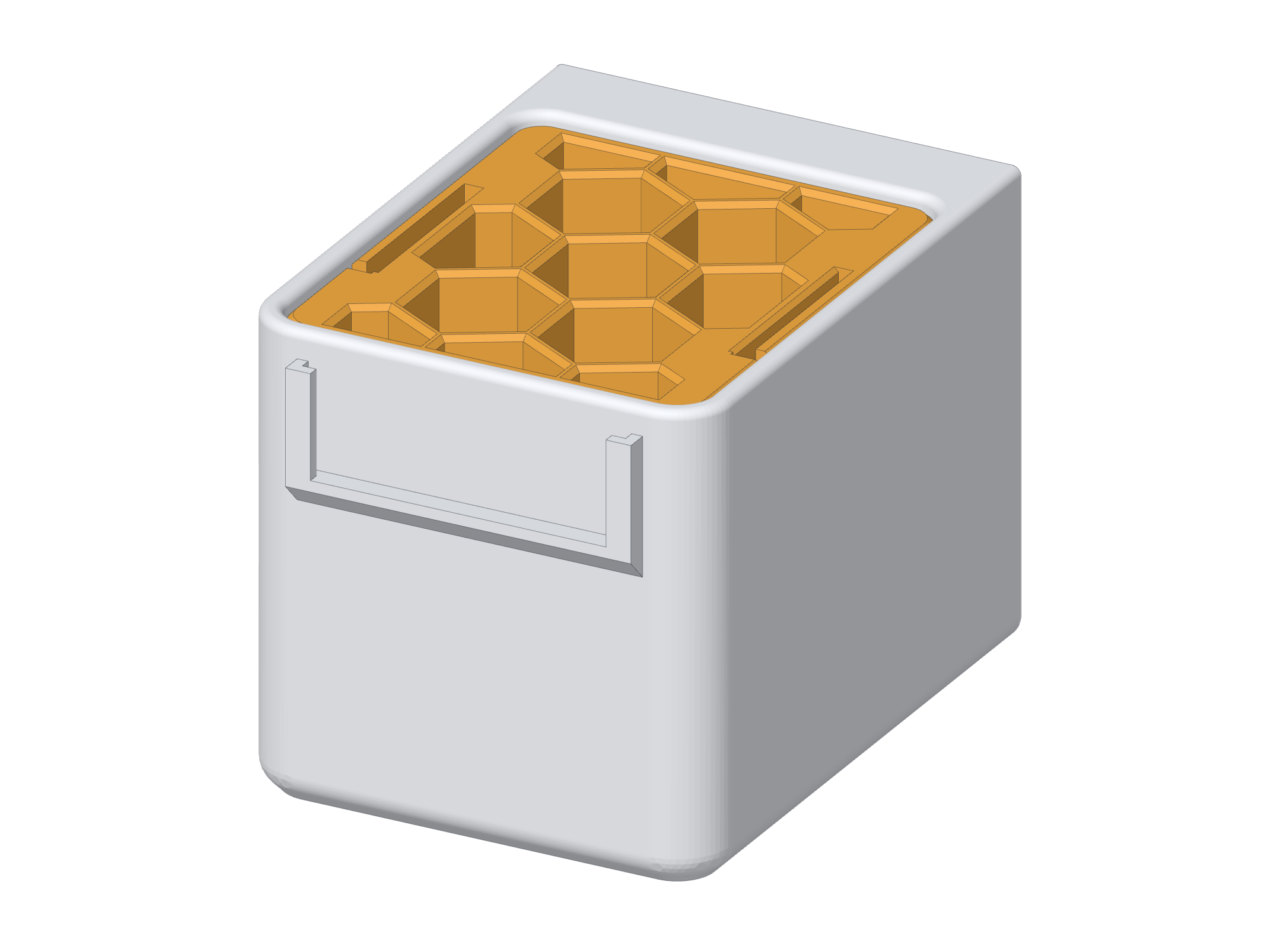
Bins for picks, pencils and markers, 65 mm deep like the drawers and trays. Each has a drop-in grid that rests on a ledge round the inside and clicks in with a spring tab on each side, so tools stand upright. Leave the grid out for an open bin. The lean bin's front leans out, so tools lie back on it and lean toward you; its grid fans them out.
 design
Pencil cup 2×2
A compact cup with a honeycomb grid for pencils, markers and picks.
 design
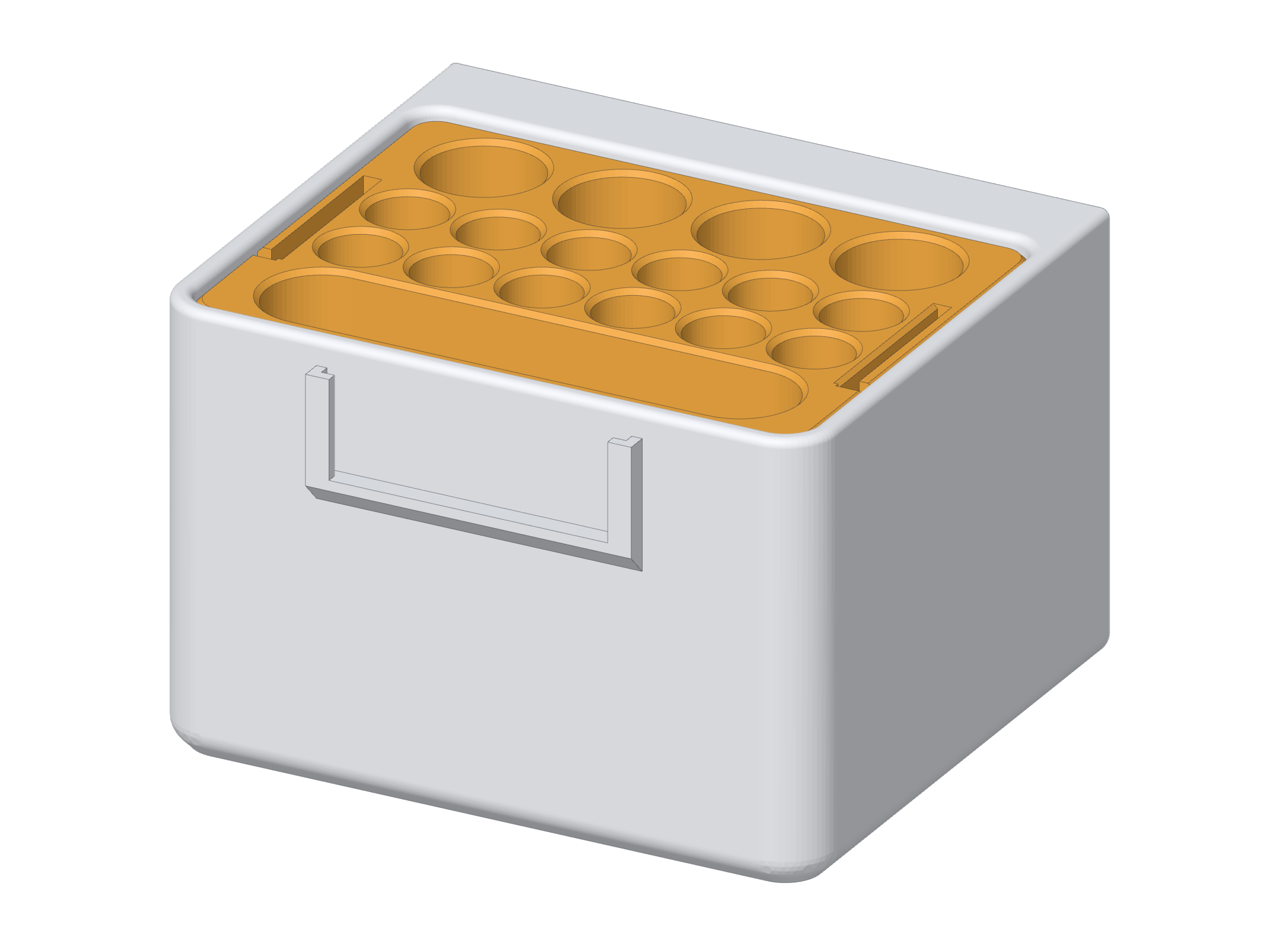
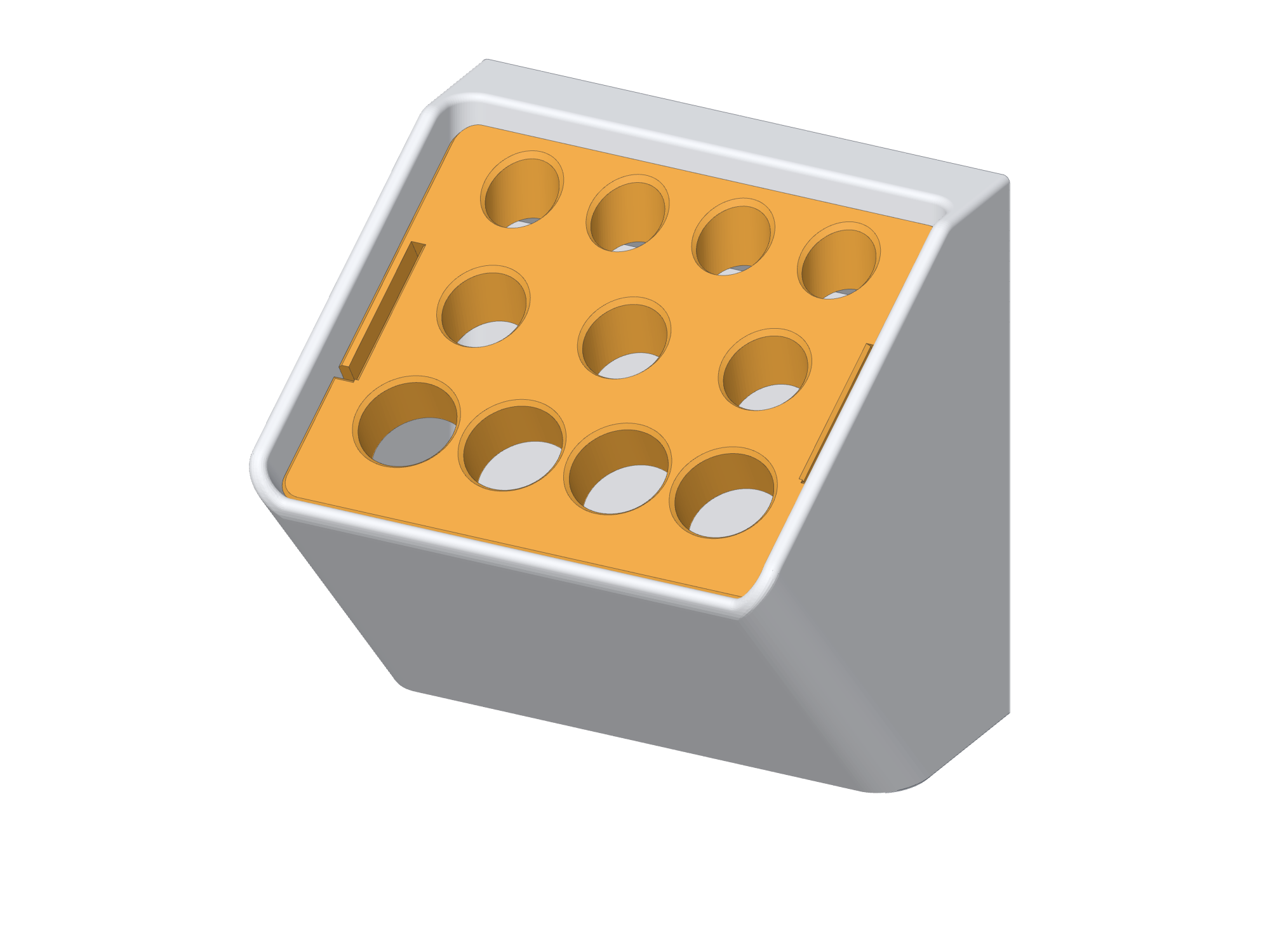
Tool caddy 3×2
Holes sized for the tools, from markers at the back to a slot for tweezers at the front.
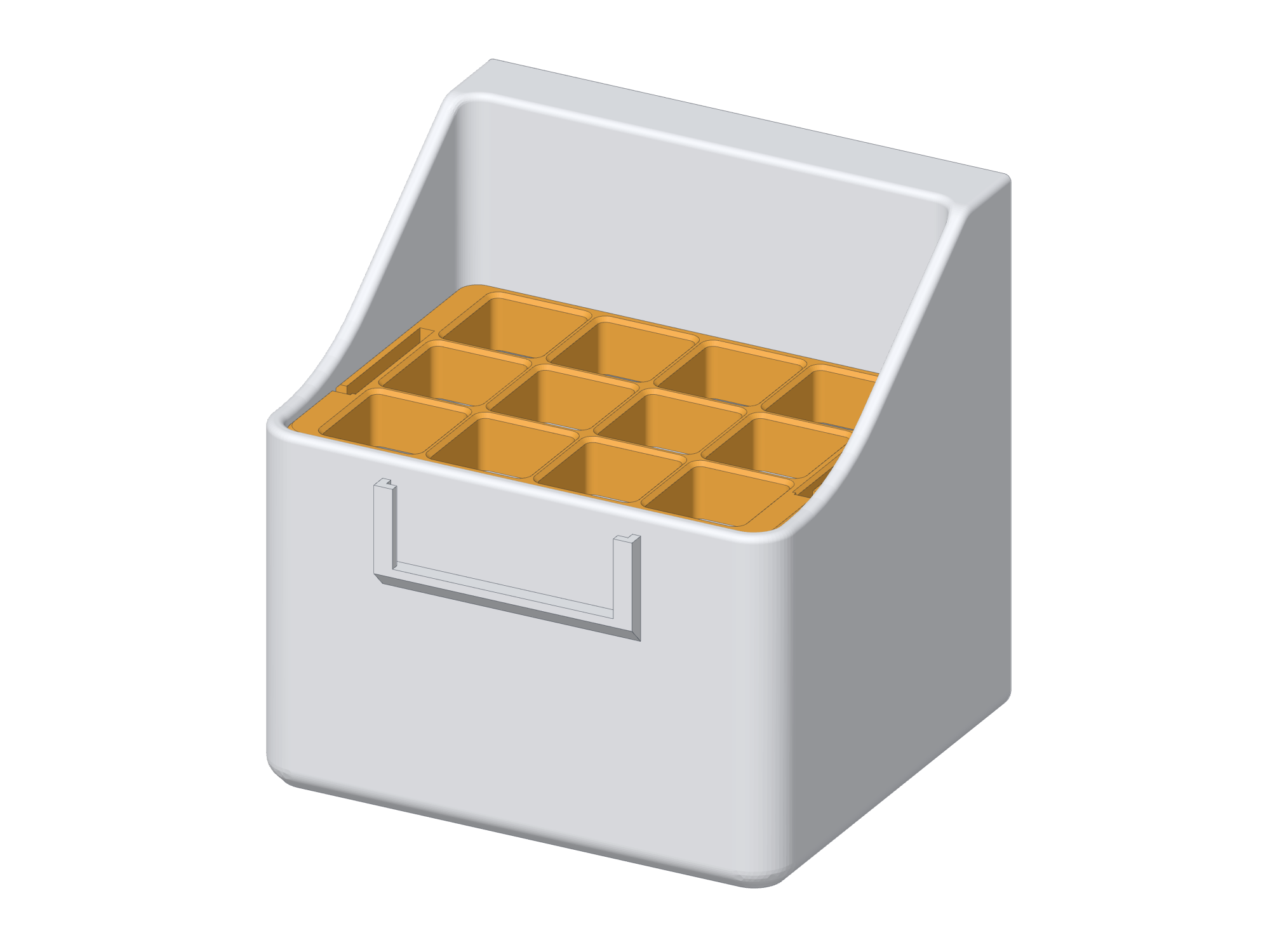 design
Tall bin 3×3
A taller back for long tools; the sides fall to the front in one S-curve.
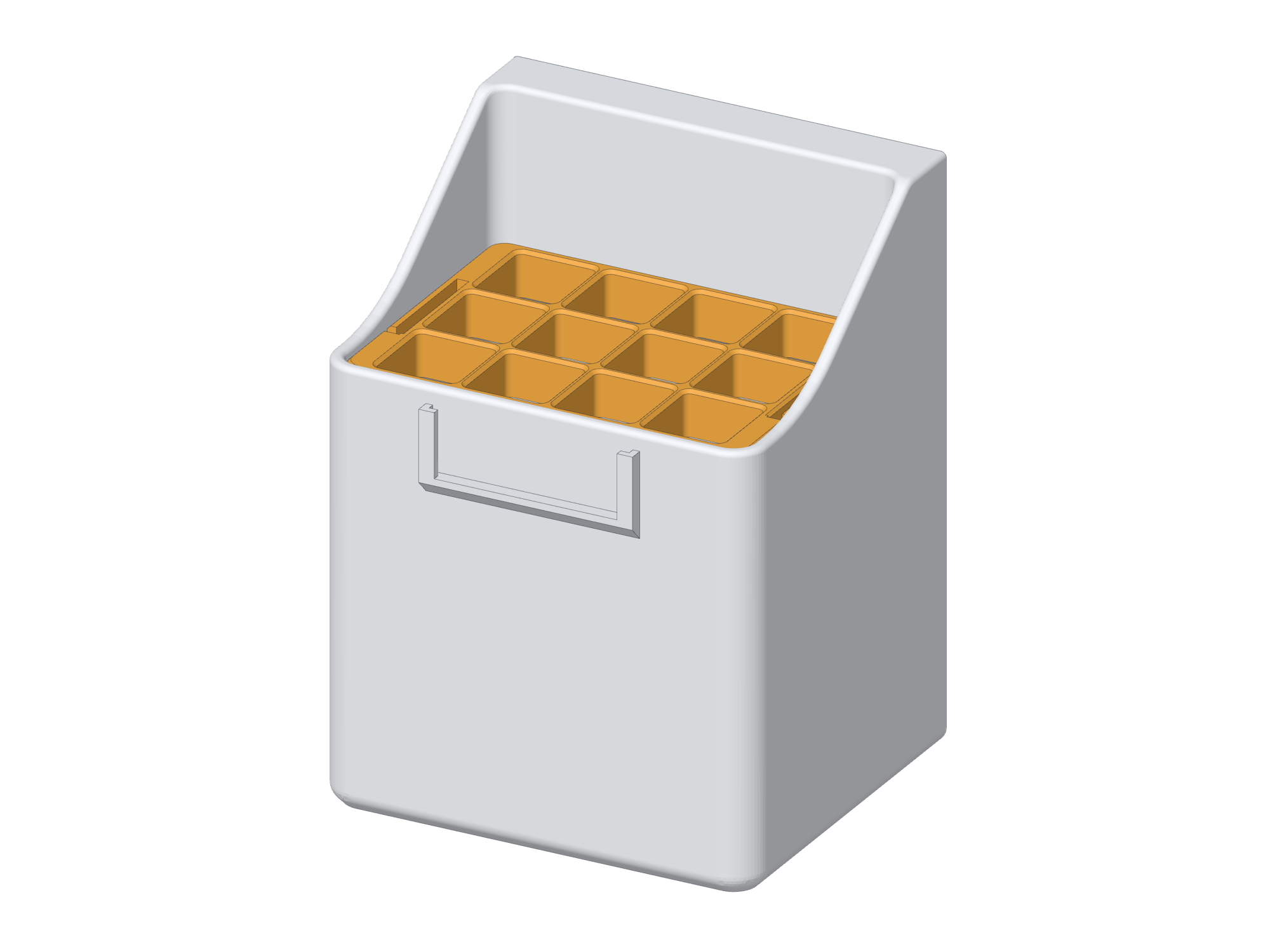 design
Tall bin 3×4
The tall bin one row taller, for long tools.
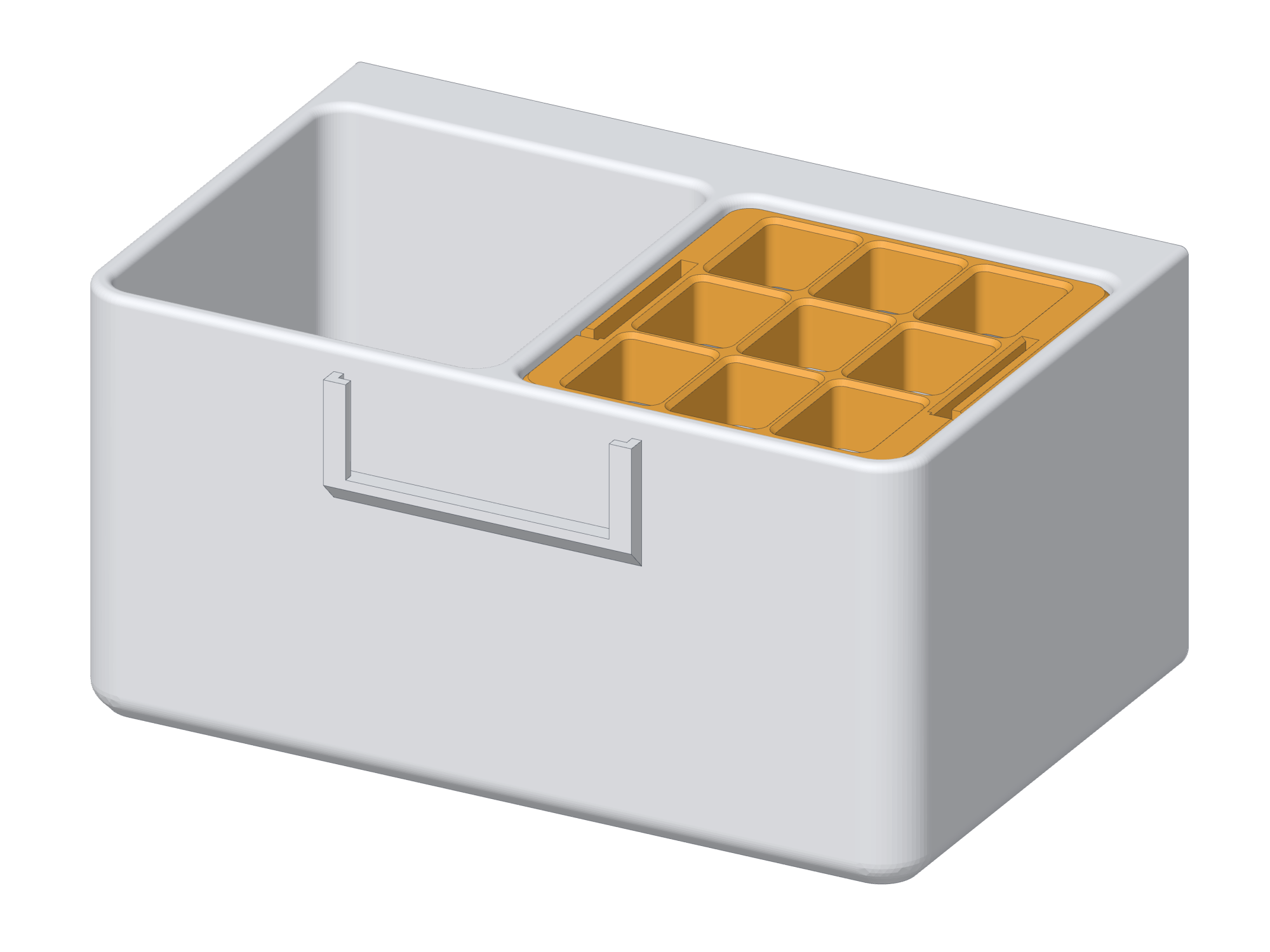 design
Split bin 4×2
A wall down the middle, a grid on the left and an open well on the right.
 design
Lean bin 3×3
The front leans out at 42°, so screwdrivers and pencils lie back on it and lean toward you.
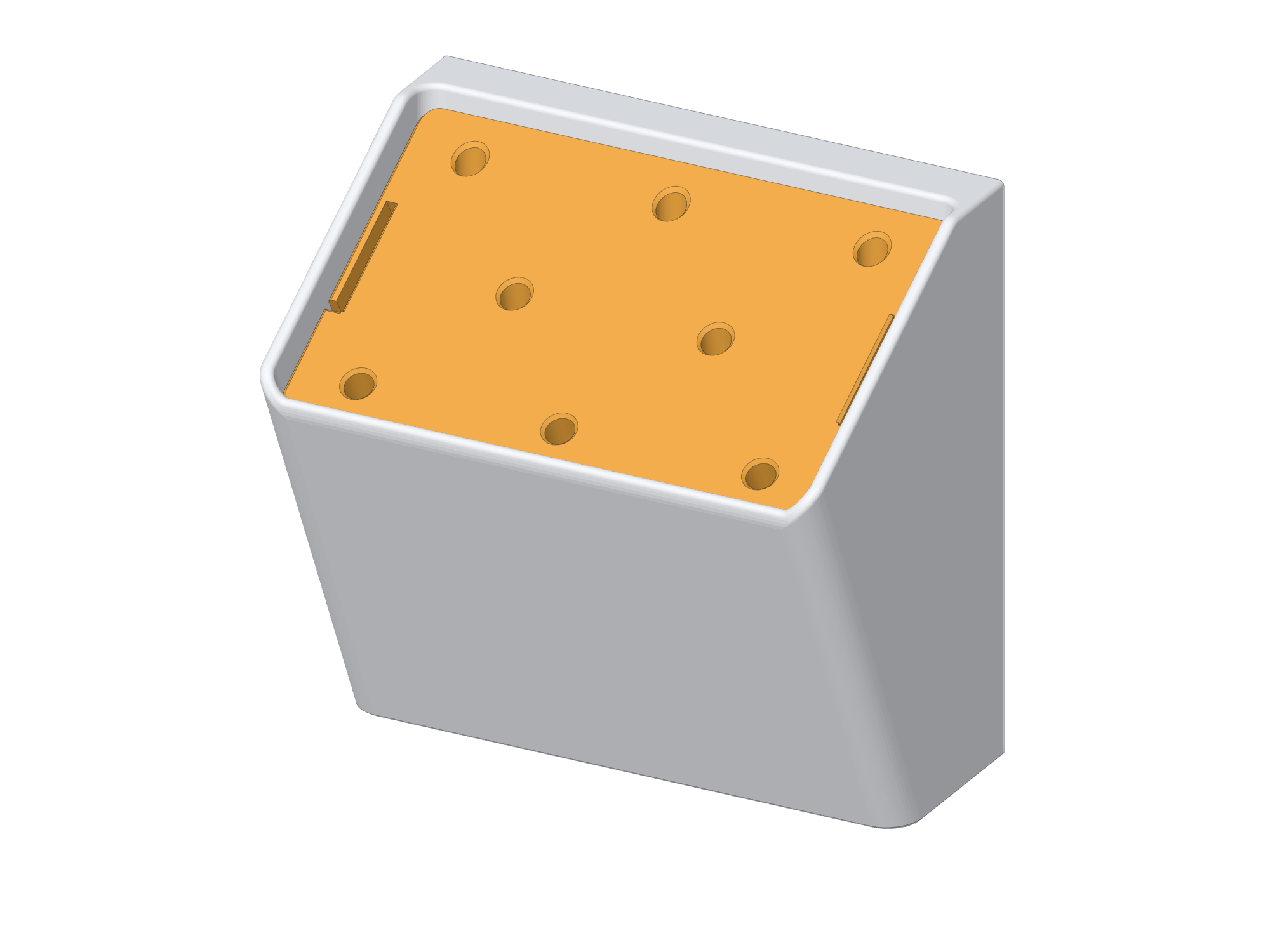 design
Lean bin 4×4, screwdrivers
A taller, wider lean bin with a screwdriver grid that holds 8 drivers fanned out, handles clear of each other.
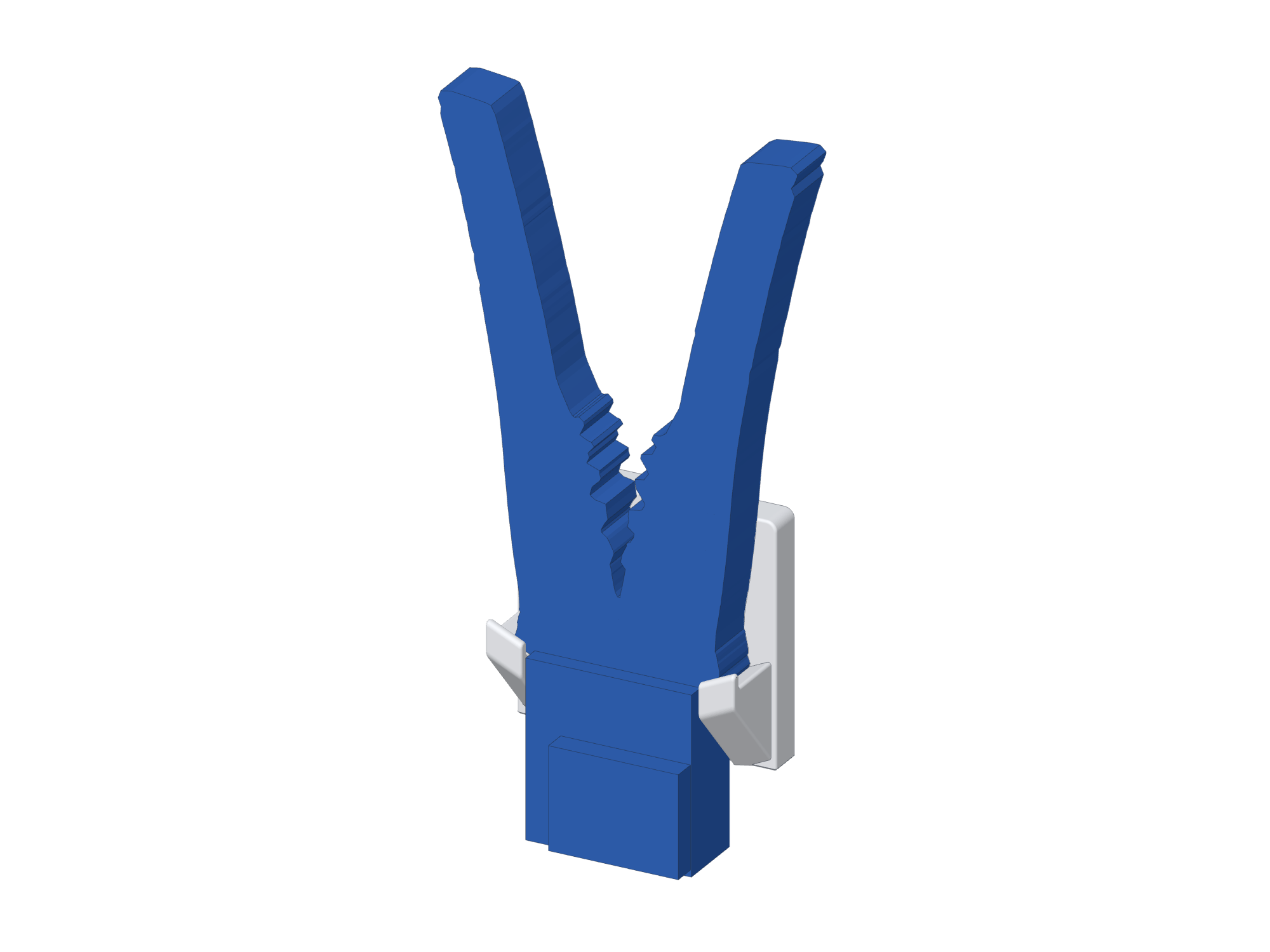
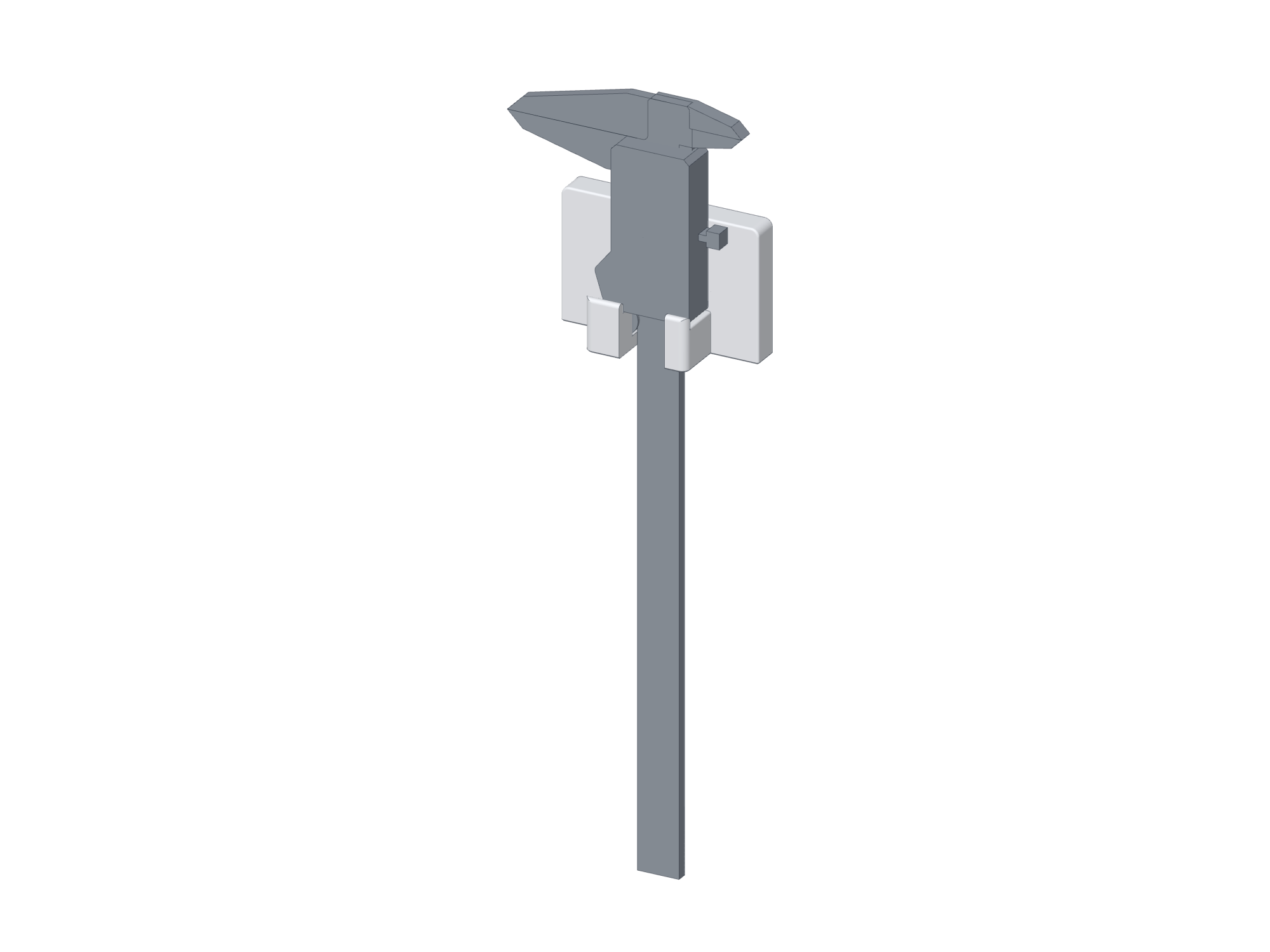
Tool holders
Holders shaped round one hand tool, so it hangs in view and lifts straight out. They hang on the same hooks by dovetail pockets in their back plate and print upright without supports.
Labels
Two-colour labels for bins and drawers, printed face down.

Panel reference
The panel geometry every part takes its numbers from.